Grade Calculator Guelph: How to Calculate University of Guelph GPA
January 9, 2026

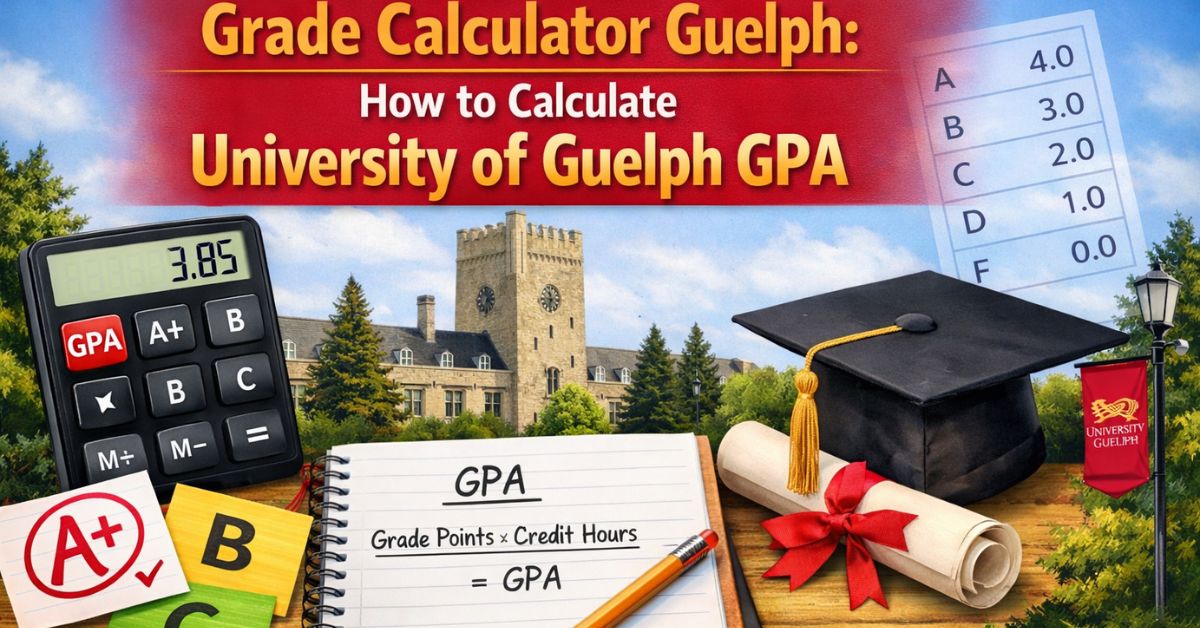
Figuring out your GPA can feel like a puzzle, especially at a place like the University of Guelph. You’ve got courses, different credit weights, and a grading system that needs to make sense. That’s where a grade calculator Guelph tool comes in handy. It takes the guesswork out of knowing where you stand academically. Whether you’re trying to hit a certain average for a program or just curious about your progress, having a reliable way to calculate your GPA is super useful. This guide will walk you through how to use these tools and even how to do it yourself.
Okay, so you’re at the University of Guelph, and you’ve got classes, assignments, and exams piling up. It’s a lot to keep track of, right? You’re probably wondering how all those grades actually add up to your overall GPA. That’s where a Grade Calculator Guelph comes in handy. It’s basically a tool that helps you figure out your Grade Point Average without having to do all the messy math yourself.
Think of it like this: each course you take has a certain weight, and the grade you get in that course contributes to your GPA. Some courses are worth more credits than others, so a good grade in a high-credit course will have a bigger impact than a good grade in a low-credit one. It can get complicated pretty fast, especially when you’re juggling multiple classes each semester.
Here’s a quick look at what goes into the calculation:
Using a calculator takes the guesswork out of it. You just plug in your grades and credit information, and it spits out your GPA. This can be super useful for seeing where you stand academically and if you’re on track for your goals. It’s especially important to keep an eye on your GPA because it affects your academic standing.
Sometimes, just knowing your current GPA isn’t enough. You might want to see how a specific grade in an upcoming final exam could change things. A good calculator lets you play around with different scenarios, giving you a clearer picture of what you need to aim for.
Alright, let’s talk about how grades actually work at the University of Guelph. It’s not just about getting a number; there’s a whole system behind it. Most of your courses will use a letter grade system, which then gets translated into a Grade Point Average (GPA) on a 4.0 scale. This is pretty standard stuff for Canadian universities, but it’s good to know the specifics. Grade calculator Guelph is a tool to help University of Guelph students figure out their Grade Point Average.
Here’s a breakdown of the common letter grades and what they generally mean:
The University of Guelph uses a specific conversion table to translate these letter grades into numerical values for GPA calculation. This conversion is important because your GPA is what universities and other institutions look at. It’s a way to standardize performance across different courses and students. You can find the official conversion chart on the university’s academic calendar, which is a good resource to bookmark.
It’s really important to know how your grades are being converted. Sometimes, a B- might seem okay, but its numerical value on the 4.0 scale can impact your overall GPA more than you’d think. Paying attention to these details early on can save you a headache later.
For international students, understanding how your previous academic credentials translate can also be a bit of a process. The university has guidelines for international credentials to help with this, ensuring your past work is fairly assessed.

So, what exactly is this “Grade Calculator Guelph” thing we keep talking about? Think of it as your personal academic assistant, specifically designed for the University of Guelph. It’s a tool that helps you figure out your Grade Point Average (GPA) without having to do all the math yourself. You know, the kind of math that involves multiplying grades by credit weights and then adding everything up. It takes the guesswork out of understanding your academic standing.
How does it work, you ask? It’s pretty straightforward, really. You input your course information – usually the course name, the grade you received (whether it’s a letter grade like an A-, a percentage, or a numerical value), and how many credits that course is worth. The calculator then uses a preset system, often based on the university’s official grading scale, to convert your grades into points. It multiplies those points by the credit weight for each course and then sums it all up. Finally, it divides the total grade points by the total credits attempted to give you your GPA.
Here’s a simplified breakdown of the process:
Some calculators might even let you see how a specific grade in a current course could affect your overall GPA, which is pretty neat.
Essentially, a Guelph Grade Calculator is a digital shortcut. It automates the complex calculations involved in GPA determination, making it easier for students to track their academic progress and understand their performance within the university’s specific grading framework. It’s about saving time and reducing the chance of making simple arithmetic errors.
It’s important to remember that different calculators might have slightly different interfaces or features, but the core function remains the same: simplifying GPA calculation for U of G students.
Okay, so you’re probably wondering why you’d even bother with a Guelph grade calculator. I mean, can’t you just wait until the end of the semester and see what happens? Well, sure, you could. But that’s kind of like driving without a map, right? You might get somewhere, but it’s going to be a lot more stressful, and you might miss some important turns.
Using a grade calculator is all about getting a clear picture of where you stand academically, right now. It’s not just for the end of the term; it’s a tool you can use throughout your studies. Think of it as a way to keep tabs on your progress, course by course. It helps you see how those assignments, midterms, and participation marks are actually adding up.
Here’s why it’s a smart move:
It’s easy to get caught up in the day-to-day of classes and assignments. A grade calculator pulls you back and gives you a broader perspective on your academic performance. It’s like having a quick check-up for your grades, helping you spot any issues before they get serious.
Plus, if you’re thinking about what comes after Guelph, like grad school or even just transferring credits, having a solid grasp of your GPA is key. Tools like this can even help you see how your grades might translate internationally, which is handy if you’re considering studying abroad or applying to universities outside of Canada.
Basically, it takes the guesswork out of your grades and puts you in control. It’s a simple tool, but it can make a big difference in how you approach your studies and manage your academic journey at the University of Guelph.
So, you’ve got your grades, and you’re wondering how to plug them into a grade calculator Guelph. It’s not too complicated, really. Most online tools work pretty similarly, and using a grade calculator Guelph can save you a lot of head-scratching.
Here’s a general rundown of how to get started:
Remember, the accuracy of your calculated GPA depends entirely on the accuracy of the information you input. Double-check those credit weights and grades before you hit calculate!
Some grade calculator Guelph tools might offer extra features, like saving your calculations or providing a link to share. Others might have a built-in conversion chart for the University of Guelph’s grading system, which is handy if you’re unsure about specific grade equivalents. Using a grade calculator Guelph is a straightforward way to keep tabs on your academic performance.
So, you want to figure out your GPA without any fancy online tools? Totally doable. It just takes a little bit of math and knowing how the University of Guelph does things.
First off, you need your grades for each course and how many credits each course is worth. The university uses a credit system, and each course has a specific weight. This weight is super important because it tells you how much that course’s grade impacts your overall GPA. A 1.0 credit course matters more than a 0.5 credit course, obviously.
Here’s the basic idea:
Let’s look at a quick example. Say you took:
Total Grade Points = 3.0 + 1.85 = 4.85
Total Credits = 1.0 + 0.5 = 1.5
Your GPA = 4.85 / 1.5 = 3.23
Remember, this manual calculation is a good way to really understand what goes into your GPA. It helps you see how each mark and credit weight plays a part in your final number. It’s not just a random score; it’s a weighted average of your academic performance.
It might seem like a lot of steps, but once you do it a couple of times, it gets pretty straightforward. Just make sure you’re using the official U of G grade conversion scale to get the most accurate result.
Okay, so you’ve got your grades, but how do they actually add up to your GPA? It’s not just about the letter you get; the number of credits a course is worth plays a pretty big part. Think of credits as the ‘weight’ of a course. A big, heavy course like a 1.0 credit seminar is going to influence your GPA more than a 0.5 credit elective.
At the University of Guelph, courses are typically assigned credit values, often represented as 0.5, 1.0, or sometimes even 1.5 credits. This number tells you how much that specific course contributes to your overall academic load for a semester and, consequently, to your GPA calculation.
Here’s the basic idea:
So, a course with more credits has a bigger impact. Getting a B+ (3.3) in a 1.0 credit course is better for your GPA than getting a B (3.0) in that same 1.0 credit course. Conversely, a lower grade in a high-credit course can pull your GPA down more significantly.
Understanding credit weights is key to seeing how your academic performance translates into your overall GPA. It’s not just about the grades themselves, but how much each grade ‘counts’ towards your final average. This is why focusing on doing well in your higher-credit courses can be particularly beneficial for your academic standing.
This is why when you’re using a GPA calculator, you’ll always be asked for both the grade and the credit weight for each course. Without the credit weight, the calculation just wouldn’t be accurate.
Okay, so you’re trying to figure out your GPA, maybe using a calculator or doing it by hand. It seems pretty straightforward, right? Well, sometimes little things can trip you up, and before you know it, your calculated GPA isn’t quite what it should be. It’s easy to make errors, especially when you’re juggling multiple courses and different grading scales.
One of the most common slip-ups is mixing up credit weights. Remember, not all courses are worth the same amount. A 3-credit course has a bigger impact on your GPA than a 1-credit seminar. Always double-check that you’re using the correct credit weight for each course.
Here are a few other things to watch out for:
It’s also easy to get confused about what grades actually count. For instance, some introductory courses might not factor into your overall GPA in the same way as upper-level courses, or maybe you’re looking at a specific program’s GPA versus your university-wide GPA. Understanding these nuances is key.
When you’re calculating your GPA, especially if you’re doing it manually, take your time. It’s better to spend a few extra minutes to get it right than to have an inaccurate number that could affect your academic planning or applications later on. Double-checking your work is always a good idea.
Another pitfall is not accounting for how grades are weighted within a single course. Some calculators or methods might just ask for your final letter grade, but if you’re trying to predict your standing, you need to know the weight of assignments, midterms, and the final exam. Tools like the Mark Calculator can help break this down for individual courses.
You might be tempted to only think about your GPA when the semester is wrapping up, but using a Guelph grade calculator throughout the term can be super helpful. It’s not just for end-of-year planning; it’s a tool for real-time academic management.
Think about it: you get a midterm back, or an assignment grade. Instead of just filing it away, you can pop those numbers into your Guelph grade calculator. This gives you an immediate snapshot of where you stand. This proactive approach helps you identify potential issues early on.
Here are a few key times to fire up your Guelph grade calculator:
Using a Guelph grade calculator isn’t about obsessing over numbers; it’s about staying informed and in control of your academic journey. It turns abstract goals into tangible targets.
For instance, let’s say you have a course that’s 30% of your semester credits. If you get a 70% on a midterm that’s worth half of that course’s grade, your Guelph grade calculator can quickly show you how that impacts your overall GPA. You can then see what you need to score on the final exam to bring your grade up. It’s much better than guessing! You can even use tools like the free GPA calculator to get a sense of how different universities calculate GPAs, which can be useful if you’re thinking about future academic steps.
Don’t wait until the end of the semester to find out where you stand. Regular check-ins with your Guelph grade calculator can make a real difference in managing your academic performance.
Keeping track of your GPA is pretty important at the University of Guelph, not just for bragging rights, but because it actually affects your academic standing. Basically, if your GPA dips too low, you could end up on academic probation, which is definitely not where you want to be. The university has specific GPA thresholds that students need to meet to stay in good standing.
Generally, you’ll want to aim for a GPA that keeps you well above the minimum requirements. While the exact numbers can shift slightly or have different implications depending on your program and year, a common benchmark to stay clear of trouble is often around a 60-69% average, which translates to a GPA that’s not too far from a 1.7 on the 4.0 scale. However, this is a bare minimum, and many programs, especially for things like scholarships or graduate school applications, will look for much higher GPAs. For instance, admission to graduate studies often requires a minimum grade equivalent to a B- or a 3.0 GPA.
Here’s a general idea of what you might encounter:
It’s always a good idea to check the official academic calendar or speak with an academic advisor to get the most current and precise details for your specific situation. They can give you the exact GPA figures you need to maintain.
Understanding these requirements isn’t just about avoiding negative consequences; it’s about setting realistic academic goals for yourself throughout your degree. Knowing the targets helps you plan your coursework and study habits more effectively.
Using a grade calculator Guelph can be a lifesaver here. It lets you see where you stand at any point in the semester, so you can identify if you’re at risk of falling below the required GPA and take action before it becomes a bigger problem. It’s a proactive way to manage your academic progress.
So, you’re thinking about applying for scholarships or maybe even grad school after your time at Guelph? That’s awesome! A big part of those applications is showing you’ve been doing well academically. This is where a Grade Calculator Guelph can really be your friend.
It helps you keep a running tally of your academic performance, which is super important when deadlines are looming. Instead of trying to guess where you stand, you can get a clear picture of your GPA. This is especially useful because many scholarships and graduate programs have specific GPA cutoffs. Knowing your current GPA allows you to see if you meet the minimum requirements or if you need to focus on improving your grades in certain courses.
Here’s how it can make a difference:
When you’re putting together applications for scholarships or graduate studies, having a precise GPA figure readily available saves a lot of stress. It means you can focus your energy on writing a killer personal statement or securing strong reference letters, rather than scrambling to figure out your academic standing. It’s about presenting your best self, and a clear GPA is a key part of that picture.
For example, let’s say you’re aiming for a competitive scholarship. You might use the calculator to see what GPA you need to achieve by the end of the semester to meet the scholarship’s criteria. You can even play around with hypothetical grades to see how different outcomes would affect your overall GPA. This kind of foresight is invaluable when you’re crafting effective scholarship applications.
Ultimately, a Grade Calculator Guelph isn’t just about crunching numbers; it’s a tool that helps you manage your academic journey with a clear goal in mind, making those big post-graduation steps feel a lot more achievable.

When it comes to figuring out your GPA at the University of Guelph, you’ve got a couple of main options: online calculators or doing it all by hand. Both have their own quirks, and what works best really depends on what you’re looking for.
Online tools are pretty straightforward. You pop in your grades and credit weights, and bam, it spits out your GPA. They’re quick and usually handle the grade conversions for you, which is a lifesaver. Many of these calculators will even let you save your results or share them, which can be handy for keeping track over time. Some even offer a way to convert your GPA to a percentage or look at different grading scales, which is useful if you’re comparing yourself to other institutions or just want a different perspective on your performance. You can find a GPA calculator that fits your needs. They often have a clean interface, making it easy to add multiple courses without much fuss.
On the flip side, doing it manually means you’re really getting into the nitty-gritty of the calculation. This is great if you want to understand exactly how your GPA is put together, credit weights and all. It forces you to be really precise with your numbers. You’ll need to know the University of Guelph’s grading scale and how each letter grade translates to a point value.
Here’s a quick look at the pros and cons:
Ultimately, the choice between an online tool and manual calculation comes down to your personal preference and how much detail you want to be involved in. For most students, an online calculator is probably the way to go for quick checks, but understanding the manual method is always a good idea.
Some universities even offer downloadable spreadsheets, like an Excel version of a mark calculator. These can be a good middle ground, offering structure and automation while still being on your own device. You can update it as you go, keeping a running tally of your academic standing throughout the semester.
So, you’re looking to boost that GPA, huh? It’s totally doable. A lot of students think it’s all about cramming the night before, but honestly, that’s not the best way to go about it. It’s more about being smart with your time and how you approach your studies.
First off, really get to know the grading system. You know, how each letter grade translates to a number on the 4.0 scale. This helps you see exactly what you need to aim for in each course. For example, a B+ is good, but if you’re aiming for that A-, you know you need to bump up your percentage a bit more.
Here are a few things that really make a difference:
Don’t wait until the end of the semester to figure out where you stand. Use a GPA calculator regularly. It’s like a check-up for your grades. You can see your current standing and figure out what you need to do in your remaining assignments or exams to hit your target GPA.
Sometimes, it’s not just about studying harder, but studying smarter. Think about your learning style. Are you a visual learner? Do you need to write things down? Tailoring your study methods to how you learn best can make a big impact. Also, don’t forget to take breaks. Burnout is real, and stepping away for a bit can actually make you more productive when you return.
And remember, your GPA isn’t the only thing that matters. But if improving it is your goal, being consistent and proactive is key. You’ve got this!
Want to boost your grades at the University of Guelph? We’ve got some awesome tips to help you out. Check out our guide on “13. Tips to Improve Your GPA at the University of Guelph” for easy-to-follow advice. Ready to make your academic life easier? Visit our website now for more helpful strategies! Good luck with your studies!
GPA stands for Grade Point Average. It’s a number that shows your average grades in all your classes. A higher GPA means you’re doing better overall.
You can calculate your GPA by multiplying the grade points for each course by its credit weight, adding those numbers up, and then dividing by the total number of credits you’ve taken.
Doing it manually means you do all the math yourself. Using a calculator tool, like one for Guelph, is much faster because you just enter your grades and credits, and it does the math for you.
No, courses have different credit weights. A 1.0 credit course is usually worth more than a 0.5 credit course, meaning its grade will have a bigger impact on your GPA.
The University of Guelph uses a letter grading system, like A+, B, C-, etc. These letters are then turned into numbers on a 4.0 scale to figure out your GPA. For example, an A+ is usually a 4.0.
Yes! Using a GPA calculator during the semester can help you see how you’re doing and what grades you might need on future assignments or exams to reach your desired GPA.
Many scholarships and programs, especially for graduate school, look at your GPA to see if you meet their requirements. A good GPA shows you’re a strong student.
If your GPA drops below a certain level, you might be put on academic probation or face other academic actions. It’s important to keep track of your grades to avoid this.


