QQQ Canadian Equivalent For Long Term Investors
February 6, 2026

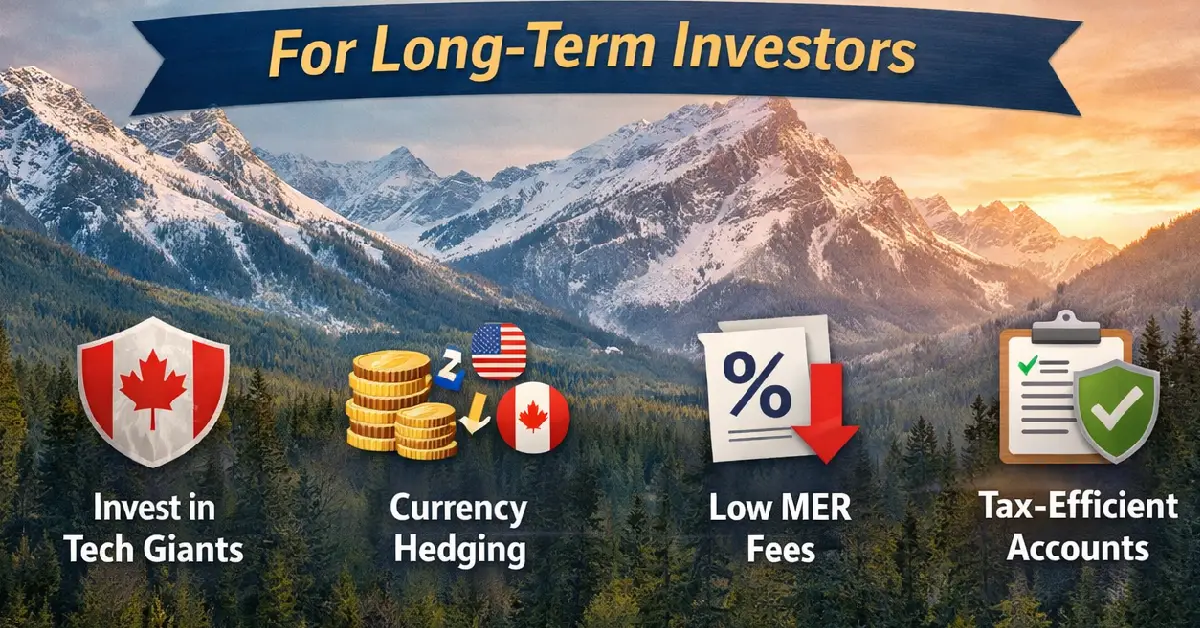
So, you’re a Canadian investor looking at the QQQ ETF and wondering if there’s something similar you can buy right here at home. That’s a smart move. QQQ, which tracks the Nasdaq-100, is super popular for its focus on big tech and growth companies. But for Canadians, holding US-listed ETFs can sometimes mean extra paperwork or tax headaches. That’s where a qqq Canadian equivalent comes into play. These ETFs aim to give you that same exposure to the Nasdaq-100, but they’re listed on Canadian exchanges, making them easier to manage within your RRSP or TFSA. Let’s break down what that means for your long-term investing goals.
Alright, let’s talk about QQQ. If you’ve been around the investing block, especially in the tech world, you’ve probably heard of it. QQQ, officially the Invesco QQQ Trust, Series 1, is a super-popular exchange-traded fund (ETF) that tracks the Nasdaq-100 Index. Think of it as a way to get a piece of the biggest non-financial companies listed on the Nasdaq stock exchange. We’re talking about the giants – the tech titans, the innovators, the companies that seem to be shaping our future.
So, why do Canadian investors often look for a “QQQ Canadian equivalent”? It boils down to a few things. First off, direct investment in US-based ETFs like QQQ can sometimes come with extra paperwork and tax considerations for Canadians. Plus, there’s the currency exchange rate – every time the Canadian dollar strengthens against the US dollar, it eats into your returns. It’s like trying to run with weights on your ankles.
Canadian investors want a way to tap into that Nasdaq-100 growth potential without all the potential headaches. They’re looking for something listed on their home turf, the Toronto Stock Exchange (TSX), that mirrors QQQ’s strategy. This usually means an ETF that tracks the same index but is traded in Canadian dollars and might even handle the currency conversion for you. It’s about simplifying access to a powerful investment idea.
Here’s a quick look at what QQQ typically holds:
Essentially, Canadian investors are seeking a familiar path to a well-known US investment strategy, tailored for their local market. It’s about convenience, potential tax advantages, and managing currency risk. For those prioritizing income over share-price growth in retirement, the Vanguard FTSE Canadian High Dividend Yield Index ETF (TSX: VDY) is a recommended option, though it serves a different purpose than a QQQ-like ETF.
Investing in ETFs that track major US indices can be appealing due to the historical performance of those markets. However, for Canadian investors, understanding the nuances of currency, fees, and tax implications when choosing between US-listed and Canadian-listed equivalents is key to making a sound decision for their long-term financial goals.
So, what exactly is this Nasdaq-100 index that QQQ tracks? Think of it as a curated list of the 100 biggest non-financial companies listed on the Nasdaq stock exchange. It’s a pretty big deal, especially if you’re interested in the tech world, because a huge chunk of these companies are in technology. It’s not just about tech giants, though; you’ll find companies from various sectors like retail, healthcare, and industrials, as long as they aren’t primarily financial services firms.
The Nasdaq-100 is a benchmark that gives investors a snapshot of how these major U.S. companies are performing. It’s weighted by market capitalization, meaning the bigger companies have a larger influence on the index’s movements. This means when Apple or Microsoft does well, it tends to lift the whole index.
Here’s a quick look at what makes up the Nasdaq-100:
When you invest in QQQ, you’re essentially buying a small piece of all these 100 companies, weighted according to their size. It’s a way to get broad exposure to some of the most influential companies in the U.S. economy, particularly those driving innovation. It’s important to remember that index performance doesn’t account for fees or tracking differences you might see in an actual ETF, like the Invesco QQQ Trust.
The Nasdaq-100 is a dynamic index. Companies are added and removed periodically to ensure it continues to represent the largest non-financial companies on the Nasdaq. This rebalancing helps keep the index relevant to current market conditions.
So, why bother with a Canadian version of QQQ when you could just buy the original? Well, for us folks up north, it often boils down to convenience and how it fits into our investment accounts. Think of it like this: you want to invest in a bunch of big US tech companies, but you want to do it without all the hassle of currency conversions and potential tax headaches, especially if you’re holding it in a registered account like an RRSP or TFSA.
A Canadian-listed ETF that tracks the Nasdaq-100 index simplifies things considerably for long-term investors. It means you’re buying an ETF on the Toronto Stock Exchange (TSX) using Canadian dollars. This sidesteps the need to convert your loonies to US dollars every time you want to buy or sell, which can add up in fees and exchange rate fluctuations over the years of investing. Plus, when you hold these Canadian equivalents within registered accounts, you often avoid the US withholding tax on dividends that you might otherwise pay if you held the US-listed QQQ directly.
Here’s a quick rundown of why it makes sense:
It’s really about making the investment process smoother and potentially more tax-efficient for Canadians who want exposure to that high-growth Nasdaq-100 segment without the cross-border complexities. It’s not about reinventing the wheel, but rather adapting a popular investment strategy to fit our local market and financial system.
Investing for the long haul is all about consistency and minimizing friction. When you can get similar exposure to a global index through a product listed on your local exchange, using your local currency, and fitting neatly into your tax-advantaged accounts, it just makes the whole journey a lot less complicated. That simplicity can be a big win over decades of investing.
When you’re looking at a QQQ Canadian equivalent, it’s not just a simple copy-paste of the original QQQ ETF. There are some important distinctions that Canadian investors need to be aware of. Think of it like comparing a local pizza joint to a big international chain – both serve pizza, but the ingredients, the process, and even the final taste can be quite different.
One of the most obvious differences is the underlying structure and management. While QQQ tracks the Nasdaq-100 Index directly on a US exchange, Canadian equivalents are typically structured as Canadian ETFs listed on the TSX. This means they are designed to be more accessible for Canadians, often with currency hedging built in to mitigate the fluctuations between the US and Canadian dollars. This currency aspect is a big deal for long-term investors, as it can significantly impact your overall returns.
It’s easy to think that a QQQ Canadian equivalent is just a direct swap for QQQ, but that’s not quite right. The differences in currency, fees, and how they’re structured for Canadian investors mean you really need to look at the specifics of each QQQ Canadian equivalent to see if it fits your investment goals.
For instance, when comparing ETFs like BMO’s ZQQ and iShares’ HXQ (or XQQ as it’s sometimes referred to), you’ll find they both track the Nasdaq-100 and are hedged to the Canadian dollar. However, their management fees and tracking differences can vary. ZQQ, for example, might have a slightly lower MER or a better tracking difference than HXQ, making it a more cost-effective choice over the long haul. These small differences, when compounded over many years, can make a noticeable impact on your final returns when investing in a QQQ Canadian equivalent.
When you’re looking at ETFs that track the Nasdaq-100, like QQQ, a big thing to consider for us Canadians is the currency. QQQ itself trades in US dollars (USD). So, if you buy it directly, you’re exposed to the ups and downs of the USD/CAD exchange rate. This can add another layer of risk, or sometimes a benefit, to your investment.
Now, when we talk about a “QQQ Canadian Equivalent,” we’re usually talking about ETFs listed on the Toronto Stock Exchange (TSX) that aim to give you exposure to the same Nasdaq-100 companies. These Canadian-listed ETFs often come in two flavors: some are unhedged, meaning they still have that USD exposure, while others are specifically designed to be “hedged to CAD.” This hedging is a strategy to try to cancel out the currency fluctuations.
The main difference boils down to whether you want your investment’s performance to be influenced by the exchange rate or not.
Here’s a quick breakdown:
It’s not always a clear-cut decision. Some investors prefer the potential upside from currency fluctuations if the USD strengthens, while others want the simplicity and predictability of a hedged product. It really depends on your outlook for both the tech sector and the Canadian dollar.
Think about it this way: if you’re buying a US stock directly, you’re already dealing with currency. When you buy a Canadian ETF that tracks a US index, you have a choice. Do you want to add another variable (currency) to your investment equation, or do you want to keep it focused on the underlying companies? For many, especially those looking for a straightforward way to invest in US tech giants, a hedged option makes things simpler.

So, you’re looking for a way to get that Nasdaq-100 exposure right here in Canada, without having to deal with cross-border stuff? Smart move. Luckily, there are a few exchange-traded funds (ETFs) listed on the Toronto Stock Exchange (TSX) that aim to do just that. They’re designed to mimic the performance of the Nasdaq-100 index, which is what the famous QQQ ETF in the U.S. tracks.
When you’re scanning the TSX for these, you’ll likely bump into a couple of the big players. These ETFs are generally built to follow the same index, so the core idea is identical. They’re passive investments, meaning they just try to match the index’s holdings rather than having a manager pick stocks.
These ETFs are pretty similar in what they try to achieve. They all give you a slice of those big non-financial companies listed on the Nasdaq. The main differences often come down to the nitty-gritty details like management fees, how closely they track the index, and how they handle currency hedging.
When you’re looking at these Canadian equivalents, remember they’re designed to give you the Nasdaq-100 experience, but with the convenience of being traded on the TSX and in Canadian dollars. This can simplify things quite a bit for Canadian investors.
It’s worth noting that while they all track the same index, the specific holdings and the way they manage the fund can lead to slight variations in performance. So, while the goal is the same, the journey might have a few bumps along the way for each.
If you’re looking at Canadian ETFs that track the NASDAQ-100, two popular choices tend to come up: BMO’s ZQQ and Horizons’ HXQ. Both try to give you exposure close to what QQQ does in the US, but there are a few things that set these funds apart.
| Feature | ZQQ (BMO NASDAQ 100 Equity Hedged) | HXQ (Horizons NASDAQ-100 Index) |
| Structure | Traditional ETF | Total Return Swap ETF |
| Currency Hedged | Yes | No (unhedged, CAD exposure) |
| Management Fee | 0.35% | 0.25% |
| Distribution | Paid as cash (if any) | No distributions; returns reinvested |
| Tracking Method | Physical replication | Synthetic replication |
When it comes to deciding, here are a few things to think about:
Sometimes the small details—like how the ETF manages dividends or handles currency swings—end up making a lot more difference than you first expect. It’s worth looking under the hood instead of just picking the first fund with “NASDAQ” in the title.
Each ETF has its place, so think about your own risk tolerance, account type, and fee sensitivity before making a call.
When you’re looking at ETFs that mimic QQQ, the costs involved are a pretty big deal, especially if you plan to hold them for the long haul. Think of it like buying anything – you want to know what you’re paying for, right? For ETFs, the main costs to watch are the Management Expense Ratio (MER) and any other fees that might pop up.
The MER is basically the yearly fee charged by the ETF provider to manage the fund. It’s usually expressed as a percentage of your investment. A lower MER means more of your money stays invested and working for you. It might seem small, like 0.39% versus 0.20%, but over years and years, that difference adds up. Seriously, it can be thousands of dollars over a long investment period.
Here’s a quick look at some popular options and their MERs:
It’s not just the MER, though. You also want to consider something called ‘tracking difference.’ This is how closely the ETF actually follows the index it’s supposed to track. A smaller tracking difference means the ETF is doing a better job of mirroring the Nasdaq-100’s performance. Sometimes, a fund with a slightly higher MER might have a better tracking difference, which could make it a better deal overall. It’s a bit of a balancing act.
Keep in mind that while lower fees are generally better, they aren’t the only thing to look at. How well the ETF tracks the index and its overall performance history are just as important. You’re looking for the best combination of low cost and good performance.
When comparing ZQQ and XQQ, for instance, their MERs are usually the same. However, you might see slight variations in their tracking difference or how often they rebalance their holdings (portfolio turnover). A fund that turns over its holdings more frequently might incur higher trading costs, which can indirectly impact your returns, even if the MER looks the same on paper. So, digging into these details can help you pick the ETF that truly offers the most bang for your buck over the long term.

When you’re thinking about long-term investing, especially with something like a QQQ Canadian equivalent ETF, taxes are a big deal. Nobody wants to give away more money to the government than they have to, right? That’s where registered accounts come into play. These accounts are designed by the government to give you a break on taxes, making your investments grow faster.
Holding your QQQ Canadian equivalent ETF within a registered account like a TFSA (Tax-Free Savings Account) or an RRSP (Registered Retirement Savings Plan) can make a significant difference in your overall returns over time.
Here’s a quick rundown of why it’s so beneficial:
It’s important to remember that the specific tax treatment can vary slightly depending on the type of QQQ Canadian equivalent ETF you choose, especially concerning foreign withholding taxes on dividends (which we’ll touch on later). However, the general principle of tax deferral or tax-free growth within these registered accounts remains a powerful tool for any long-term investor.
The choice of account matters. Using a taxable brokerage account means you’ll be liable for taxes on dividends and capital gains each year, which can eat into your returns. Registered accounts sidestep this issue, letting your investment compound without the annual tax drag. It’s a simple concept, but one that many investors overlook when planning their long-term strategy.
When you invest in ETFs that hold stocks from U.S. companies, like those tracking the Nasdaq-100, you’ll likely encounter dividends. These dividends are typically paid out by the underlying companies. For Canadian investors looking at QQQ Canadian equivalents, understanding how these dividends are treated, especially concerning withholding taxes, is pretty important for your overall returns.
The main thing to know is that dividends paid by U.S. companies to non-U.S. investors are generally subject to a 30% U.S. withholding tax. This tax is applied before the dividend even reaches your ETF, and then it gets passed on to you. However, there’s a bit of good news here, thanks to tax treaties between Canada and the U.S.
Here’s a breakdown of what usually happens:
It’s also worth noting that the dividends paid by the ETF itself (if it distributes them) are treated differently depending on whether the ETF is Canadian or U.S.-domiciled and whether it’s held in a registered or non-registered account. For Canadian-domiciled ETFs that track U.S. indexes, the dividends are typically reinvested within the ETF, or if distributed, they are treated as Canadian distributions, which can simplify your tax reporting. However, the initial U.S. withholding tax on the underlying U.S. company dividends is the primary concern.
The tax implications can get a bit complicated, especially when you consider currency exchange and the specific structure of the ETF. It’s always a good idea to check the ETF’s prospectus or speak with a tax professional to fully understand how dividends and withholding taxes will affect your specific investment situation.
For Canadian investors, the key takeaway is that while U.S. withholding taxes exist on dividends from U.S. companies, holding Canadian-listed ETFs that track U.S. indexes can offer some relief compared to direct U.S. stock ownership in non-registered accounts. And for registered accounts like RRSPs, the tax is generally not an issue at all.
When you’re looking at Canadian ETFs that mimic the QQQ (which tracks the Nasdaq-100), you’ll often see terms like ‘hedged’ and ‘unhedged’. This is a pretty big deal for long-term investors, and it basically comes down to how they handle the US dollar versus the Canadian dollar.
An unhedged ETF buys US stocks, and its value fluctuates with both the stock market’s performance and the exchange rate between the USD and CAD. If the Canadian dollar strengthens against the US dollar, your investment is worth less when you convert it back. If the Canadian dollar weakens, you get a bit of a boost.
A hedged ETF, on the other hand, tries to remove that currency risk. It uses financial instruments to keep the ETF’s value tied more closely to the US dollar performance, regardless of what the exchange rate is doing. For Canadian investors, this means the ups and downs of the USD/CAD exchange rate won’t directly impact your returns.
So, which is better for the long haul? It really depends on your outlook for the Canadian dollar.
Here’s a quick look at how they differ:
| Feature | Unhedged ETF (e.g., XQQ) | Hedged ETF (e.g., ZQQ) |
| Currency Risk | Exposed to USD/CAD fluctuations | Minimized via hedging |
| Potential Upside | Stock gains + currency gains (if CAD weakens) | Stock gains only |
| Potential Downside | Stock losses + currency losses (if CAD strengthens) | Stock losses only |
| Complexity | Higher | Lower |
Many Canadian investors lean towards hedged ETFs for their Nasdaq-100 exposure because they want to focus on the tech sector’s growth without the added noise of currency markets. It simplifies the investment and makes performance easier to predict relative to the underlying index. However, it’s worth noting that hedging isn’t free; there are costs associated with it, which can sometimes lead to slightly higher management expense ratios (MERs) or tracking differences compared to unhedged versions.
Ultimately, the choice between hedged and unhedged comes down to your personal view on the future of the Canadian dollar relative to the US dollar. For many, especially those focused on the long-term growth of the tech sector, eliminating currency risk through a hedged ETF provides a cleaner investment experience.
Looking at how these Canadian ETFs that mimic QQQ have performed over time is pretty important, right? It gives you a real-world picture beyond just the index numbers. While past performance isn’t a crystal ball for the future, it’s a solid way to see how closely they’ve stuck to their goals and how they’ve handled market ups and downs.
When you compare ETFs like BMO’s ZQQ and iShares’ XQQ, you’ll often find their performance is very similar. They’re both designed to track the Nasdaq-100, and usually, they do a decent job of it. For instance, over five years, their returns tend to be almost identical, offering a pretty consistent experience for investors.
However, there can be small differences. Take tracking difference, for example. This is basically how well the ETF follows its benchmark index. A smaller tracking difference means the ETF is doing a better job of mirroring the index’s performance. Some reports show ZQQ having a slightly lower tracking difference than XQQ, which could mean it’s a bit more efficient at replicating the Nasdaq-100.
Here’s a general idea of how these ETFs might stack up over different periods. Keep in mind these are just examples, and actual numbers will vary:
It’s also worth noting that some ETFs, like Invesco’s QQC.F (though it’s hedged differently), might show slightly better performance or have lower fees, which can make a difference over many years. The key is to look at the actual numbers for the specific ETF you’re considering, usually found in their fund facts or prospectus documents.
When you’re checking out historical performance, don’t just look at the headline return number. Dig a little deeper into things like tracking differences and management expense ratios (MERs). These details can significantly impact your net returns over the long haul, especially with a strategy focused on growth like the Nasdaq-100.

Okay, so you’re thinking about putting your money into a Canadian ETF that tracks the Nasdaq-100, kind of like QQQ. That’s cool, but before you jump in, let’s chat about some things that could go sideways. It’s not all sunshine and rainbows, you know?
First off, these ETFs are basically tied to the Nasdaq-100 index. That means you’re getting a heavy dose of tech and growth stocks. Think big names like Apple, Microsoft, and Amazon. While these companies have done great, they can also be pretty volatile. If the tech sector hits a rough patch, your investment could take a hit too. Concentration in a single sector is a big deal, and you need to be comfortable with that.
Here are a few other things to keep in mind:
Remember that past performance is never a guarantee of future results. Just because a tech-heavy index has done well for years doesn’t mean it will continue to do so indefinitely. Economic conditions change, competition evolves, and new technologies can disrupt even the biggest players. It’s wise to have a long-term perspective but also to stay aware of the broader economic landscape and how it might affect your investments.
When you look at specific ETFs, you’ll see differences in things like management fees (MER) and how often they trade their holdings (portfolio turnover). A higher MER eats into your returns over time, and high turnover can sometimes mean higher trading costs. It’s worth comparing these details between different Canadian Nasdaq-100 ETFs to find the one that best fits your needs.
So, you’ve decided a Canadian equivalent to QQQ is the way to go for your long-term investing goals. That’s a solid move, but now comes the part where you actually pick one. It’s not as simple as just grabbing the first one you see, you know? There are a few things to think about to make sure you’re getting the best fit for your money.
First off, let’s talk about the nitty-gritty details. You’ll want to look at the management expense ratio, or MER. This is basically the yearly fee you pay to the fund manager. Even a small difference here can add up over the years, especially when you’re investing a good chunk of change. Think about it: a 0.39% MER versus a 0.20% MER on a large investment? That’s real money staying in your pocket instead of going to the fund company.
When you’re comparing specific ETFs, you might notice slight differences in how well they track the index. For instance, one might have a tracking difference of -0.69% while another is at -0.72%. It might seem tiny, but over a long period, these small differences can matter. It’s like a race; a few seconds here and there can make a big difference at the finish line.
You also need to consider where you’re holding this ETF. If it’s in a registered account like an RRSP or TFSA, you’ll generally avoid U.S. withholding taxes on dividends. But if it’s in a non-registered account, those taxes can eat into your returns, especially for U.S. companies. This is a big deal for long-term growth.
Don’t forget about the fund provider itself. Are they a reputable company? Do they have a good track record? Looking at ETFs from established providers like BMO or iShares can give you some peace of mind. They’ve been around for a while and manage a lot of assets, which often means stability. For example, the Vanguard FTSE Canada All Cap Index ETF (TSX: VCN) is a popular choice for Canadian diversification, showing how investors look for trusted names in the ETF space.
Ultimately, the “best” QQQ Canadian equivalent is the one that aligns with your personal financial situation, risk tolerance, and investment horizon. Take your time, do your homework, and don’t be afraid to ask for advice if you’re feeling overwhelmed. It’s your money, after all.
So, you’ve been looking into QQQ and thinking about how to get that kind of exposure from up here in Canada. It’s a solid idea, especially if you like the tech-heavy Nasdaq-100. But is it the right move for your long-term goals? Let’s break it down.
Investing in a Canadian equivalent of QQQ can be a smart play for long-term growth, provided it aligns with your risk tolerance and overall financial plan. It’s not a one-size-fits-all situation, though. You’re essentially betting on the continued success of some of the world’s biggest tech and growth companies. If you believe in that sector’s future, then these ETFs offer a convenient way to tap into it.
Think of it like this: you’re choosing a specific type of engine for your long-term financial vehicle. The Nasdaq-100 engine is powerful and has a great track record, but it runs on premium fuel (tech stocks) and needs careful maintenance (monitoring its concentration and fees). If you’re comfortable with that, it can take you far.
When deciding, look at:
Ultimately, a QQQ Canadian equivalent can be a powerful tool for long-term investors who understand its specific risks and rewards. It offers a focused way to invest in innovation and growth, but it’s not a set-it-and-forget-it solution without careful consideration of your personal financial situation and market dynamics. For a look at how QQQ itself performs, you can check out QQQ, which offers Nasdaq exposure.
Thinking about whether a Canadian version of QQQ is a smart long-term investment? It’s a big question for many investors. We break down whether this strategy fits your financial goals. Want to learn more about smart investing? Visit our website for more insights!
Currency exposure refers to how the value of your investment is affected by the exchange rate between U.S. dollars (USD) and Canadian dollars (CAD). If you invest in a U.S. fund, its value is in USD. If the Canadian dollar gets weaker compared to the U.S. dollar, your Canadian investment grows. If the Canadian dollar gets stronger, your investment might be worth less in Canadian dollars. Canadian equivalents often try to manage this difference.
The MER is a yearly fee charged by the company that manages the investment fund. It’s a small percentage of the money you have invested. Even a small difference in MER can add up over many years, so a lower MER generally means more of your investment returns stay in your pocket.
Yes, holding Canadian-listed ETFs that track U.S. indexes in registered accounts like a TFSA (Tax-Free Savings Account) or RRSP (Registered Retirement Savings Plan) is often very tax-efficient. This is because you generally don’t have to worry about U.S. withholding taxes on dividends within these accounts.
Companies in the Nasdaq-100 index pay dividends. When you own an ETF that holds these companies, you receive those dividends. For Canadian-listed ETFs that are ‘hedged to CAD,’ the dividends are usually paid in Canadian dollars. There can be U.S. withholding taxes on dividends paid from U.S. companies, but holding these ETFs in Canadian registered accounts can help avoid or reduce these taxes.
For long-term investors, a ‘hedged’ version is often preferred. Hedging means the ETF tries to remove the effect of currency changes between the U.S. dollar and the Canadian dollar. This can make your investment’s performance more predictable and less bumpy, as it focuses more on the performance of the stocks themselves rather than currency swings.